Nutrition
Plant-Based (Whole Food)
Emphasizes whole, minimally processed plant foods. May include small amounts of animal products but centers meals around plants. Less strict than vegan.
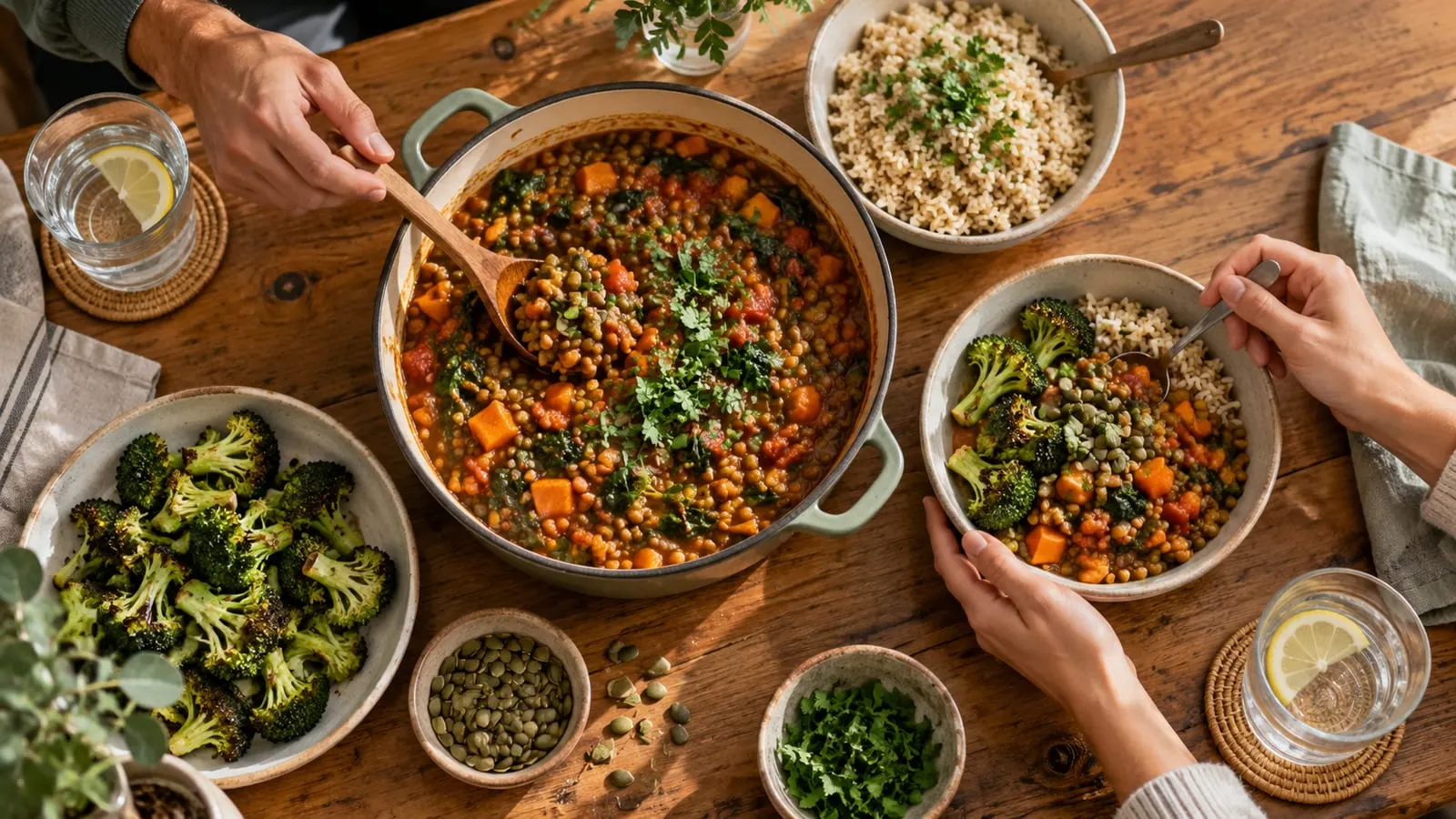
- Type
- Plant-Based
- How hard to stick to
- Easy
- Protein / carbs / fat
- 15 / 55 / 30%
The short version
People usually choose it for overall health, environmental sustainability and disease prevention.
Meals: 3 meals, plant-centered.
What you eat
- Vegetables
- Fruits
- Whole grains
- Legumes
- Nuts & seeds
- Tofu & tempeh
- Plant milks
- Herbs & spices
- Small amounts of animal products (optional)
What you cut back on
- Highly processed foods
- Refined sugars
- Refined grains
- Excessive animal products
- Artificial additives
A day of eating
One day built from the Plant-Based (Whole Food) recipes in the For The Reps app. It comes to about 1,475 calories and 79 g of protein, so scale portions up or down to suit you.
| Meal | Dish | Calories | Protein |
|---|---|---|---|
| Breakfast | Greek Yogurt-Style Cashew Bowl with Figs & Walnuts | 340 | 9 g |
| Lunch | Japanese Soba Noodle Bowl with Tofu & Sesame Greens | 466 | 27 g |
| Dinner | Japanese Miso-Glazed Tofu with Steamed Bok Choy & Rice | 464 | 33 g |
| Snack | Cinnamon Roasted Chickpea & Pumpkin Seed Bites | 205 | 11 g |
Macros
Roughly 15% of calories from protein, 55% from carbs and 30% from fat.
On 2,000 calories a day that is about 75 g of protein, 275 g of carbs and 67 g of fat.
Before you start
More flexible than strict vegan. Focus is on whole foods, not just plant foods. Well-supported by research.
If you have a medical condition, are pregnant, or take regular medication, check with your doctor or a registered dietitian before changing how you eat.