Nutrition
Vegan
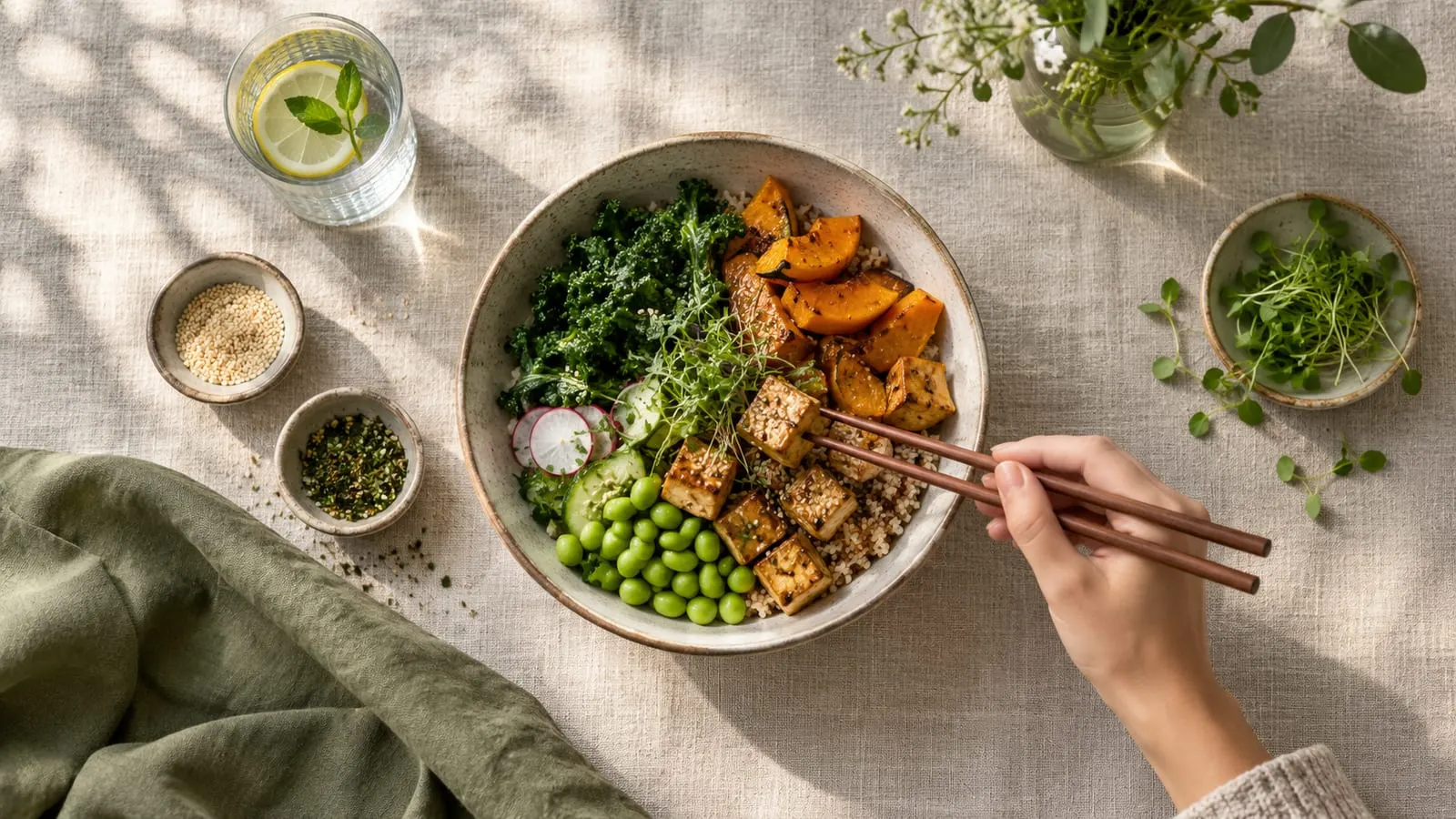
Excludes all animal products including meat, dairy, eggs, and honey. Relies entirely on plant-based foods for nutrition.
- Type
- Plant-Based
- How hard to stick to
- Moderate
- Protein / carbs / fat
- 15 / 55 / 30%
The short version
People usually choose it for ethical eating, environmental sustainability and heart health.
Meals: 3 meals plus snacks, emphasis on variety.
What you eat
- Legumes & beans
- Tofu & tempeh
- Whole grains
- Vegetables
- Fruits
- Nuts & seeds
- Plant milks
- Nutritional yeast
- Seitan
- Avocados
What you cut back on
- Meat & poultry
- Fish & seafood
- Dairy
- Eggs
- Honey
- Gelatin
- Whey
- Casein
A day of eating
One day built from the Vegan recipes in the For The Reps app. It comes to about 1,705 calories and 96 g of protein, so scale portions up or down to suit you.
| Meal | Dish | Calories | Protein |
|---|---|---|---|
| Breakfast | Whole Grain Pancakes with Maple and Walnuts | 443 | 11 g |
| Lunch | Seitan Gyro Wrap with Tahini Sauce | 512 | 40 g |
| Dinner | Miso Glazed Tofu with Soba Noodles | 509 | 37 g |
| Snack | Avocado Toast Bites with Nutritional Yeast | 241 | 8 g |
Macros
Roughly 15% of calories from protein, 55% from carbs and 30% from fat.
On 2,000 calories a day that is about 75 g of protein, 275 g of carbs and 67 g of fat.
Before you start
Requires B12 supplementation. Monitor iron, zinc, omega-3, and vitamin D. Protein combining important for athletes.
If you have a medical condition, are pregnant, or take regular medication, check with your doctor or a registered dietitian before changing how you eat.