Nutrition
Alkaline Diet
Based on the idea that certain foods affect body pH. Emphasizes fruits, vegetables, and plant proteins while avoiding acid-forming foods.
- Type
- Whole Foods
- How hard to stick to
- Moderate
- Protein / carbs / fat
- 15 / 55 / 30%
The short version
People usually choose it for general health and plant-based transition.
Meals: 3 meals, plant-focused.
What you eat
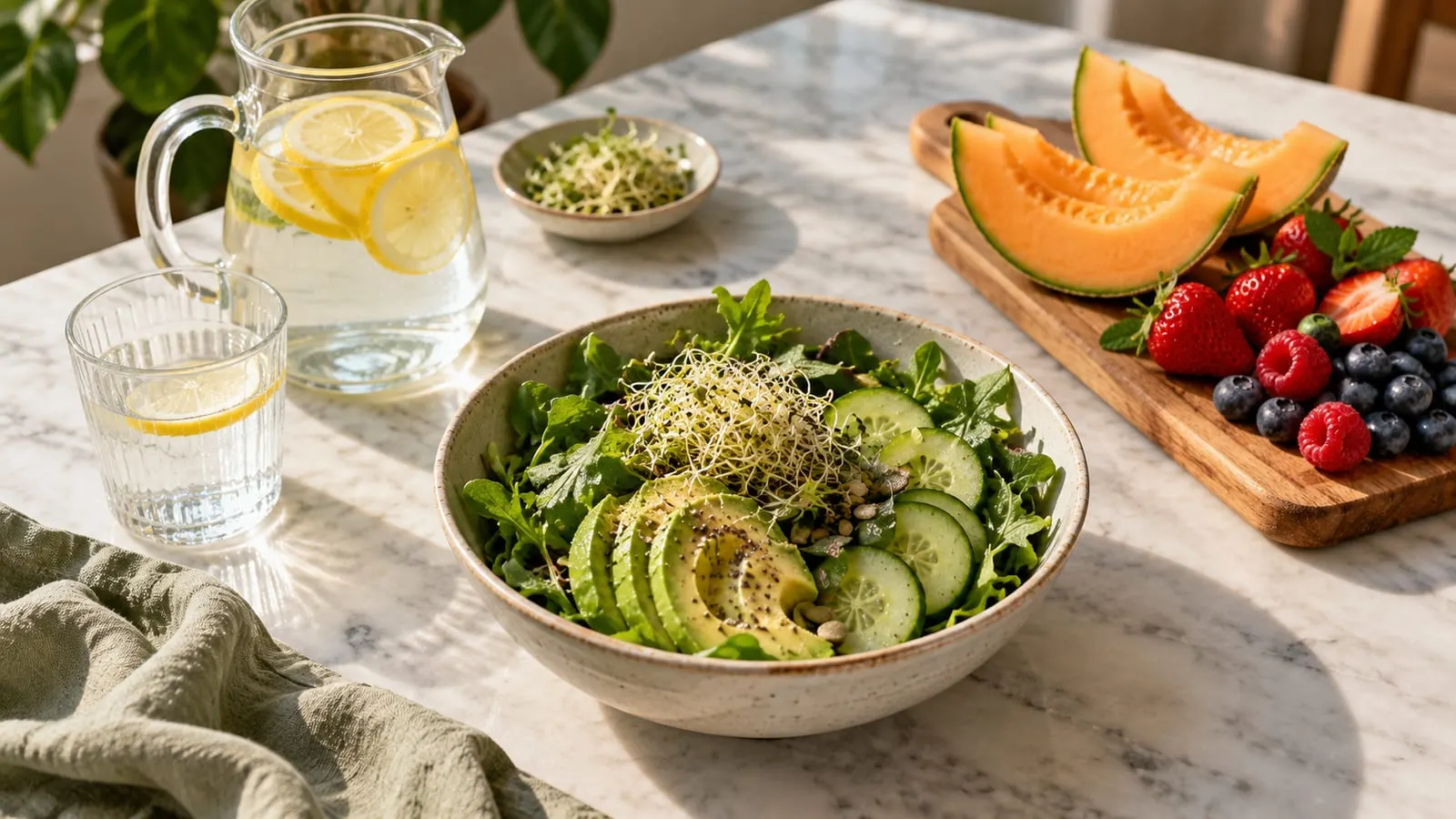
- Fruits
- Vegetables
- Nuts & seeds
- Legumes
- Tofu
- Herbal teas
- Sprouts
- Alkaline water
What you cut back on
- Meat
- Fish
- Dairy
- Eggs
- Grains
- Alcohol
- Caffeine
- Processed foods
A day of eating
One day built from the Alkaline Diet recipes in the For The Reps app. It comes to about 1,107 calories and 38 g of protein, so scale portions up or down to suit you.
| Meal | Dish | Calories | Protein |
|---|---|---|---|
| Breakfast | Lentil & Vegetable Breakfast Hash | 289 | 15 g |
| Lunch | Rainbow Chopped Salad with Chickpeas | 313 | 11 g |
| Dinner | Zucchini Noodle Pesto Bowl | 319 | 7 g |
| Snack | Celery Sticks with Tahini Dip | 186 | 5 g |
Macros
Roughly 15% of calories from protein, 55% from carbs and 30% from fat.
On 2,000 calories a day that is about 75 g of protein, 275 g of carbs and 67 g of fat.
Before you start
The pH premise is not scientifically validated. The body regulates its own pH. Benefits likely come from eating more plants, not pH changes.
If you have a medical condition, are pregnant, or take regular medication, check with your doctor or a registered dietitian before changing how you eat.